Getting started in solo adventure biking in 4 lessons

Last weekend, I was fortunate to be on stage for a couple of fun Q&A sessions at the magnificent Adventure Bike Rider Festival. One of those sessions was on the subject of ‘How to plan a solo motorbike adventure’.

After some 14 years or so of doing just that, one of the things I enjoy the most about my solo trips is the challenge of managing how I plan them and deal with the various hurdles I come up against along the way. Solo riding, and solo riding long-distance off-road in remote places in particular, provides the ultimate enjoyment in that respect.

The starting point of answering the question at hand, has to be another question – ‘well, how do you view risk and opportunity?’ Because at the end of the day, solo riding creates so much more opportunity for freedom, exploration and adventure than being in a group but it also comes with a corresponding amount of risk too. And as I pontificated last October at the head of a 200km piste in the Algerian Sahara, there is always a residual amount of risk that you can’t mitigate, no matter what you do.

Nonetheless, here’s four key lessons and reflections that I’ve learnt along the way, which I think sums up a pretty good way of planning, and undertaking, solo adventure motorbike travel.

Lesson 1: Everyone has their own way of learning

One of the things the great things about solo adventure riding in particular is that you never stop learning. Being self-reliant and getting the most out of riding an adventure bike solo, particularly over long-distances/durations or in more extreme climates, means that you need to be a more of a ‘jack of all trades’ across the piece – whether that be looking after your personal safety, ensuring your bike is fit to be ridden or ensuring you’ve got the right riding skills to meet your own level of ambition for adventure.

However, it would be a mistake to assume that every solo adventure rider takes a straightforward, upwards, linear trajectory on these things. That’s certainly not always the case – as the above chart shows from my own experience over some 12 years of this game. Strong on ambition, determination and enthusiasm, I definitely started out on my first big trip with no idea of how little I knew. In fact, it was only after I returned from riding London to Sydney solo, my second big trip, that I realised how my competences fell far short of my ambitions for solo adventure motorbike travel.

So if you’re new and are just getting started, then try and be as open-minded and curious as possible. On the one hand don’t be put off by the keyboard warriors on the TET Facebook group who seem to believe that they were born knowing everything from the get-go, and therefore anyone else who doesn’t is a fool (and share that view). But on the other, be honest with recognising your limitations and responsibilities, don’t bullshit yourself and instead go in with a ‘growth’ mindset that you’re doing this to learn.

Lesson 2: You’ve have to Just F**king Do It (JFDI)

YouTube, Facebook, Instagram, Horizons Unlimited, this blog post- there’s all manner of different sources of advice about solo adventure riding out there. But ultimately, the chances are that the reason you’re attracted to solo adventure riding is because at least a small part of you is wanting to do things things your own way. So don’t be afraid of doing just that. Research and preparation is key that but it’s nothing with practice – and vice versa. And the amount you put into one is usually pretty equal to the other.

Be selective on who you take advice from. The adventure motorbiking community is not one which is shy in coming forward with its opinions, but before you listen to that advice, who is the person giving it? Have they done what you want to do? What’s their outlook? For example, whilst the UK Trail Riders Fellowship is a great organisation doing some valuable work to keep off-road routes open, many (if not most) of its active members have joined it because they’ve made a decision that they prefer to avoid the additional risks of solo riding; that in turn frames the advice that many of those members will give you about the difficulty of particular routes etc.

Being flexible and pragmatic is also important; in my early days of riding off-road, I made a point of riding with a group of others (aka the ‘Muddy Buggers’), as well as practicing solo, because I quickly realised that (aside from a series of very fun weekends away) I would learn new riding skills more quickly that way and that I would be willing to push myself harder than I might do solo, because there were others there to scrape me off the ground if need be. In between those days away riding with that group, I would continue to practice solo, often with my bike loaded up as it would be on a trip so I could get used to handling the weight.

Decision making here is often an underrated skill to and understanding your boundaries of the risks you’re willing to get is the bedrock of that. For example, in Algeria in late 2023 I had a rule that for the more remote desert routes I rode, that I would only stick to pistes that looked like they had been recently used by others. As general rule, if you’re going to take risks then fine – but at least think through the options if that risk-taking goes wrong, and the decisions you are confident that you’ll have available to you, to get out of that situation.

Lesson 3: Welcome to the solo rider’s trilemma

With all the above being said and done, when it actually comes down to the brass-tacks of preparing for a solo adventure there are three groups of interdependent but at times competing things that you’ll need to balance:

  1. Safety and security – in terms of the basics you need to survive and the quantities you need to do so for the duration.
  2. Vehicular capability – in terms of having a suitable bike for the job at hand, which is at least reasonably reliable and easily repairable.
  3. Ability to explore – in terms of the skills you have to actually get out there and make the most of your trip, in line with your ambitions.

“So how are these interdependent yet in competition with each other?” you might ask. Well (and for example), looking at the diagram above and working your way around it from the top anti-clockwise, you might have the world’s greatest riding ability (at the top) but if your bike is the weight of a small truck (bottom left) then its going to take you longer to ride where you want to ride, which means you’ll need to carry more water and food (bottom right) to account for that duration, which in turn requires you to have greater riding ability to overcome the weight of that which….you get the picture. Similarly, if your mechanical ability is low (top) and your vehicle’s reliability is to also low (bottom left) then you’ll be faced with the same situation.

The fundamental point is this – one of the joys of solo riding, particularly off-road in more remote locations, is working out the relationship between all of these things and how to manage them accordingly.

Lesson 4: The solo rider’s hierachy of needs

So what’s the best way of managing all of this and preparing yourself to go away? Well, in my mind its about viewing all of those things from a layered point of view, as in the pyramid above. Taking this approach, and prioritising the bottom as the basis for the top, ensures you keep track of the most important things which are not just those that keep your risks down but also have a firm base on which you can develop additional skills, your ability to explore and therefore ability to take advantage of all the opportunities that solo adventure riding has to offer.
Through Turkey

Monday 23rd May

Sinop, Turkey, 670km from the Georgian border

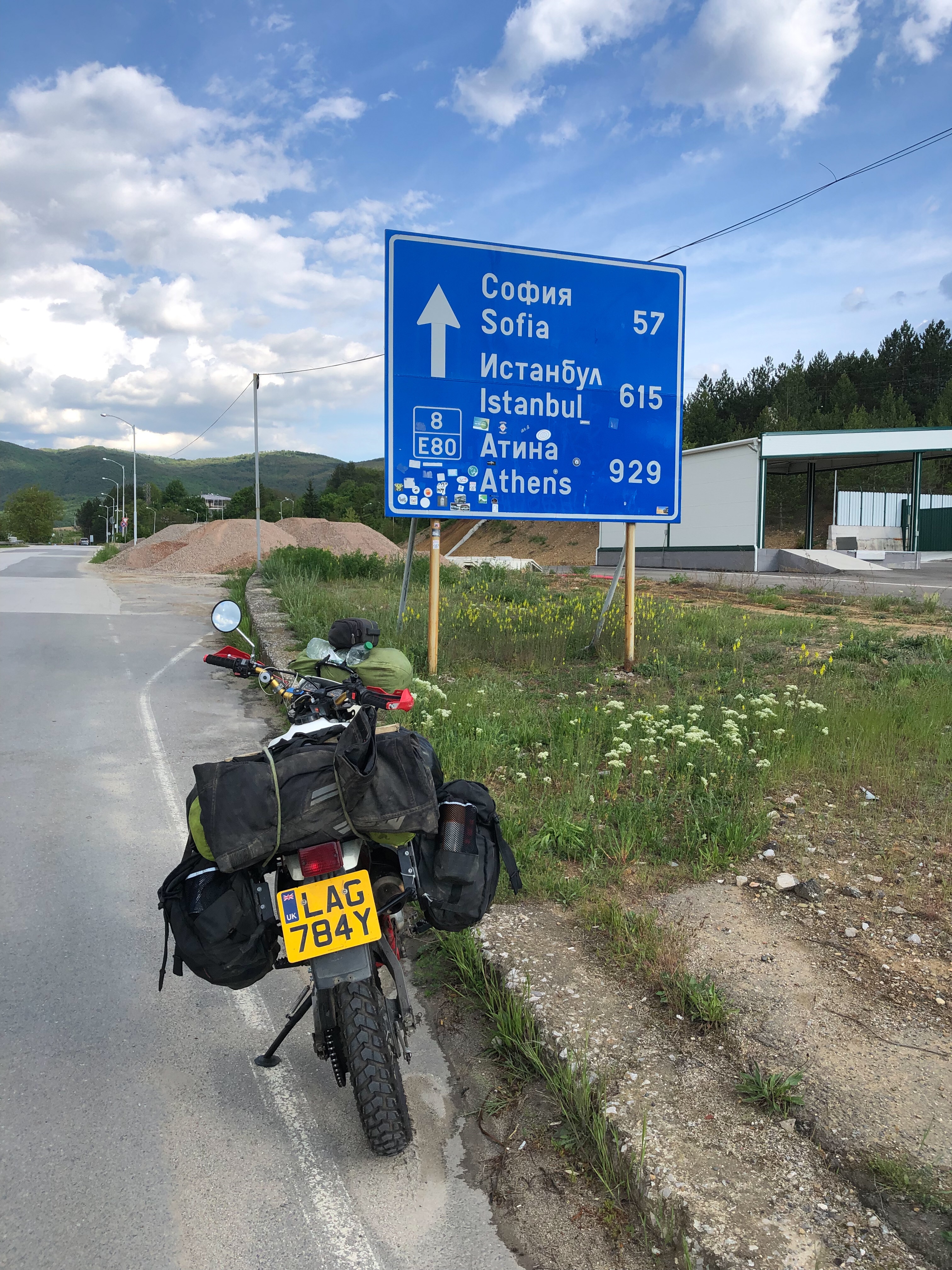
Around 60km from Burgas, on the Bulgarian Black Sea coast, I pulled into a garage to refuel the bike.

Dusk was fast approaching, the sky was a kind of purple-blue-grey hue and, with the temperature starting to drop, the only memory of the hot daytime sun was the smell of the heated earth in the flat fields around me.

The bike refuelled, I pulled on my favourite thick, blue riding sweater. I sat down on the kerb by the fuel pumps to eat the ice cream I’d just bought, only for the solitary garage attendant to motion to me over to a set of red plastic table and chairs on the edge of the forecourt, next to the entrance to the shop.
He looked like he was in his mid-fifties, skinny in a way that suggested that he’d always worked with his hands or on his feet, with dark hair. We managed to some kind of brief conversation around the usual questions, with a mixture of guesswork and hand signals.

Seemingly oblivious to the thousands of litres of petrol beneath of us and the multitude of No Smoking signs, the attendant pulled out a cigarette from his top pocket and lit it. As I munched away at my ice cream, bemused, I wondered whether an explosion might be picked up from space.

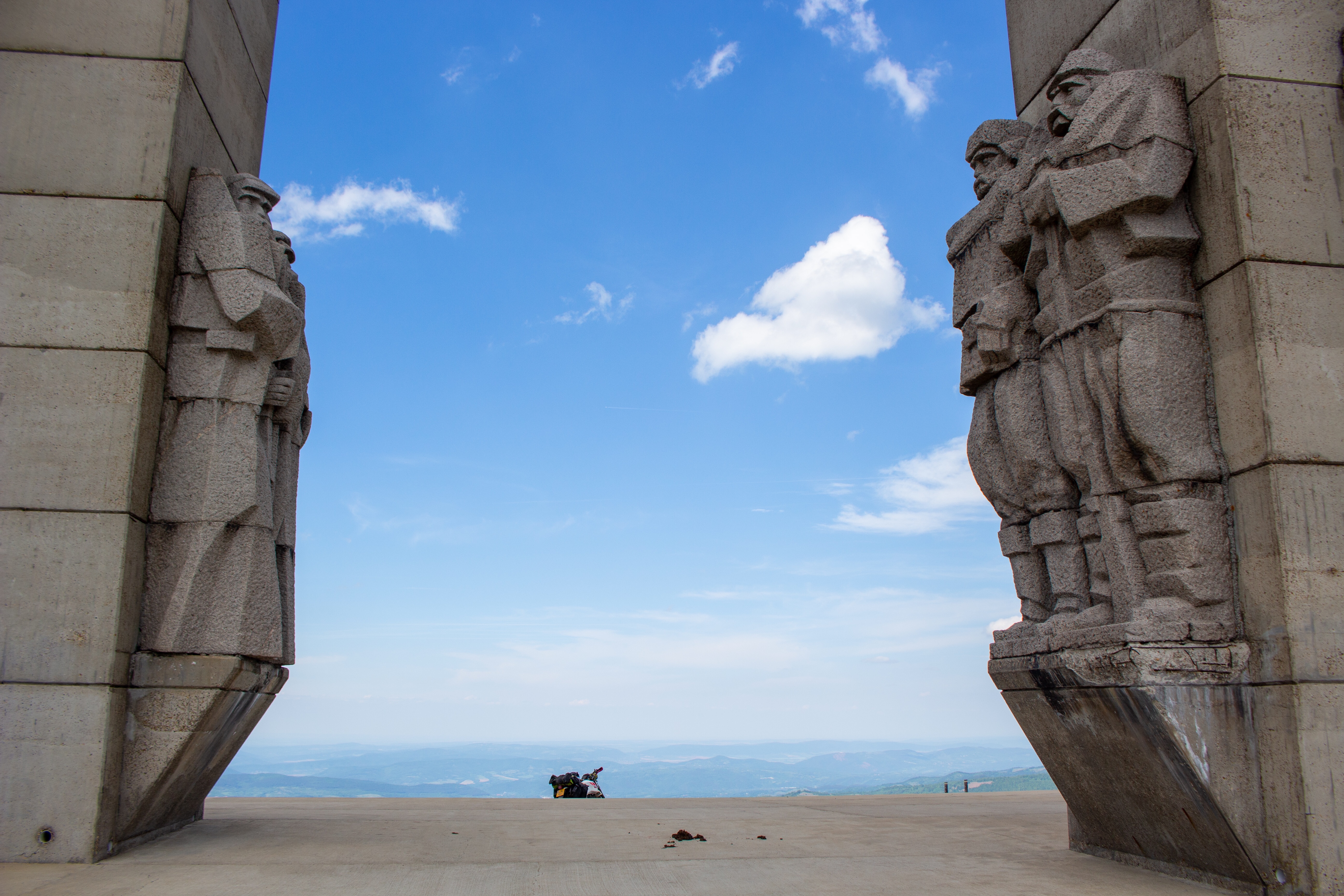
Arch of Liberty, Beklemento, Balkan Mountains, Bulgaria

My thoughts were focussed on two things. First, about the journey ahead, hoping that an annoyingly intermittent electrical fault that occurred a few times the week before, didn’t rear its head again and, secondly but arguably more importantly, about the fact that I had discovered that Milka now sold ice creams – yet we didn’t have them on sale back in the UK as far as I knew.

Just over 72 hours later, with the bike running just fine and some ‘get out of trouble’ spare parts from the UK in my pannier bags, I was in Turkey.

——

The Turkish Black Sea coast is not necessary famed for its good motorbike riding. In fact, I didn’t want to ride it on this trip. In 2015, I’d ridden the 500km long dual carriageway section from Samsun to the Georgian border en route to Sydney. It was hot, dusty and dull. And at this point I had yet to develop my love of riding alongside huge articulated trucks. So I planned to get the ferry service from Bulgaria to Georgia direct instead.

The problem was, however, that by the time I reached the Bulgarian Black Sea coast that evening, and despite that day’s journey, I was frustrated that I seemed to have spent more of the last week sitting around waiting for parts than riding. And I wanted to see if the electrical fault reappeared in circumstances I could control, rather than waiting until I got up some mountain in Georgia. I also didn’t fancy sitting around twiddling my thumbs on a boat for three days, whilst paying almost £500 for the privilege.

So instead I decided to ride there, doing as much as possible on back roads and dirt trails, following the line of the coast. Reaching Georgia by the end of the week was still my priority but it was time to make things a little bit more interesting.

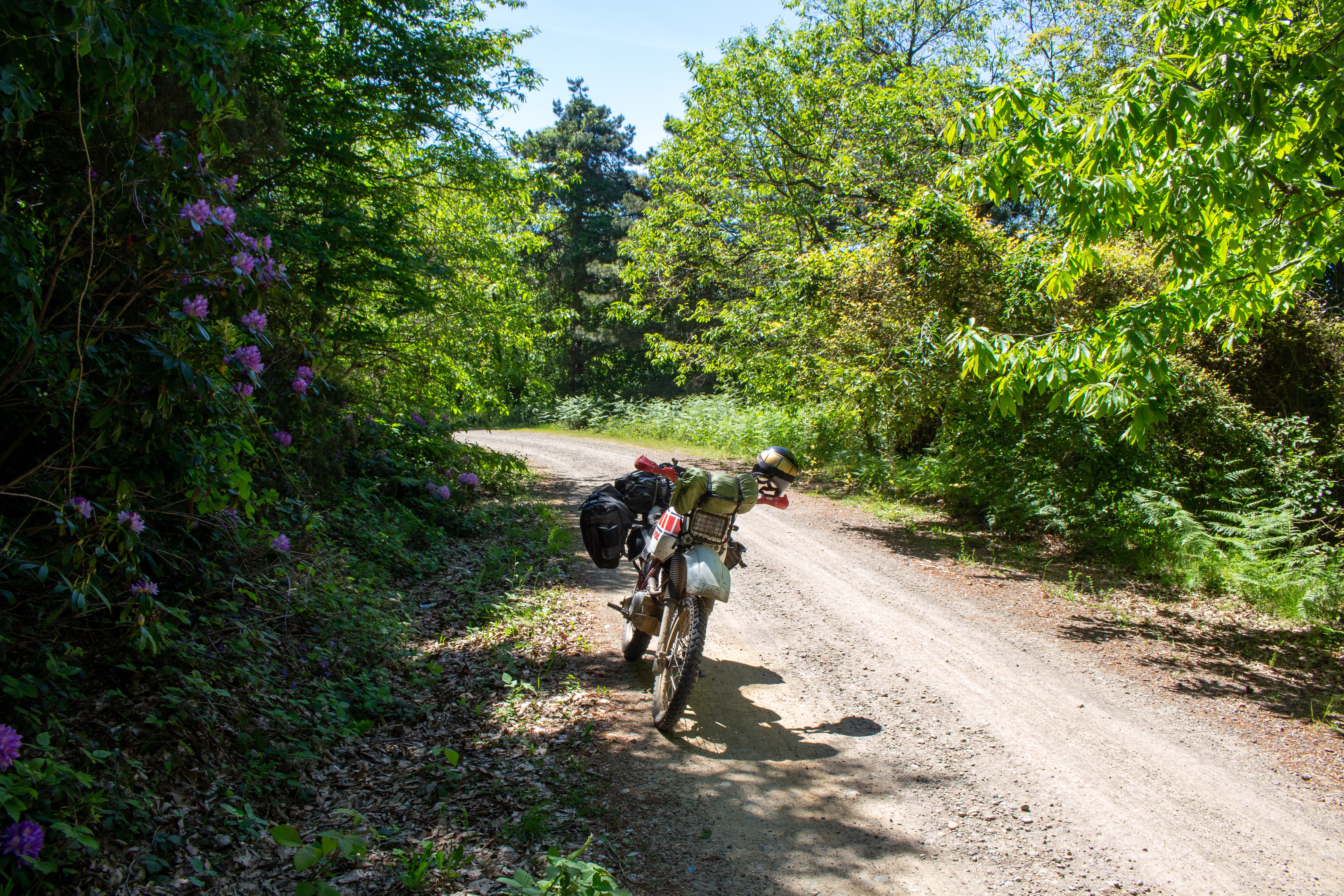
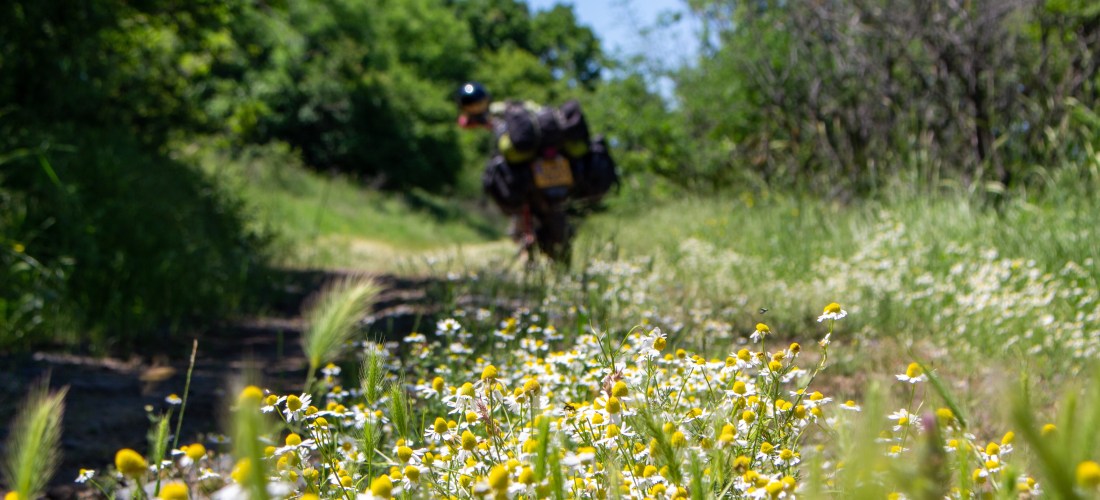
Crossing the border, green rolling hills were shrouded in thick forest, with dusty dirt tracks winding their way through remote villages with old wooden houses.

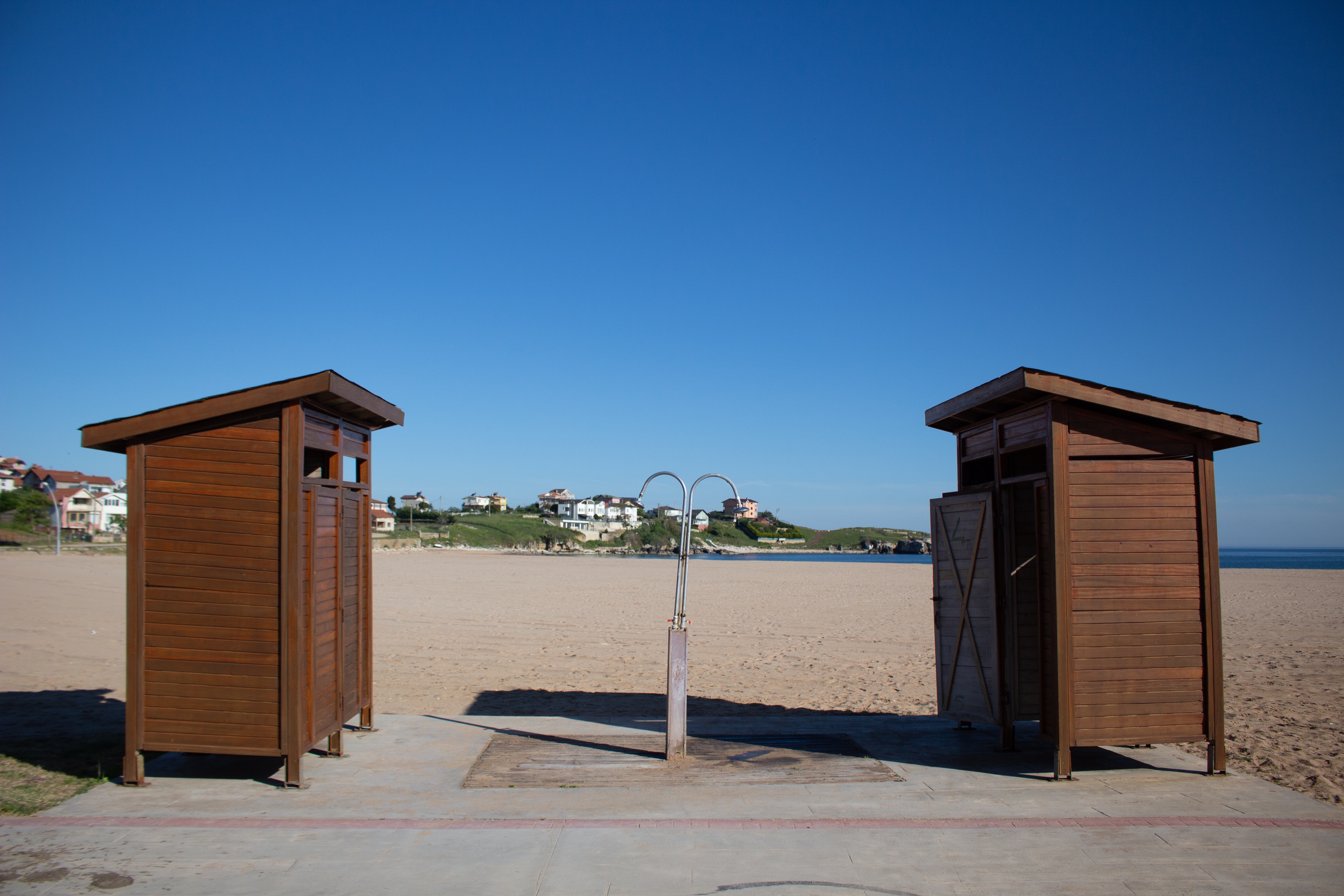
Purple Rhododendrons littered bushes edged the route, which dipped in and out from the neatly kept coastal resorts on the coast east of Istanbul, with their well kept beaches. Cloudless skies met a deep-blue sea and sandy beaches, with razor sharp lines that could cut glass.

And Turkish breakfasts with their fried pastries, white cheeses, omelettes, bread, honey, cucumbers and tomatoes kept me fuelled, as well as the odd spicy sujuk sausage sandwich and endless amounts of çaj thickly laced with honey and sugar. The latter was liberally fed to me for both payment and hospitality at cafes, petrol stations and, on one occasion, even a butcher’s shop, along the way.

And lamb shish and köfte, of course. ALL the lamb shish and köfte that you could ever eat.

All of this continued until 45km west of Cide, maybe 500km east of Istanbul. Then it was an hour or two so of twisty, windy paved road, ducking and diving up and down, keeping you permanently entertained as it hugged the coastline, up there with the best of them, maybe even the likes of the Pacific Coast Highway in California or the Great Ocean Road in Oz.

For those two hours alone, all the efforts to get there had been worth it.

Then the road became straighter and flatter. The landscape more industrial. The international smorgasbord of homicidal trucks had returned. And the dual carriageway leading all the way to the Georgian border began. The rain clouds had been threatening for the previous day or two, but only now the heavens opened.

As I sat taking shelter in a cafe on the waters’ edge, I ate a rather sweaty looking gozleme pancake, with some rather suspect looking pale lamb mince filling. The cold, wet weather meant that other than an old man sat opposite me, the place was deserted.

I decided that I’d had a good run of it. It was now time to jump on the highway to make it to Sinop for the night, and the mountains on the Georgian border beyond.

Capturing Sofia

Sunday May 15th

Sofia, Bulgaria

After the long haul down to Bulgaria from the UK, I decided to delay my Black Sea crossing to Georgia by a week to wait for some spare parts for the bike in Sofia, the capital.

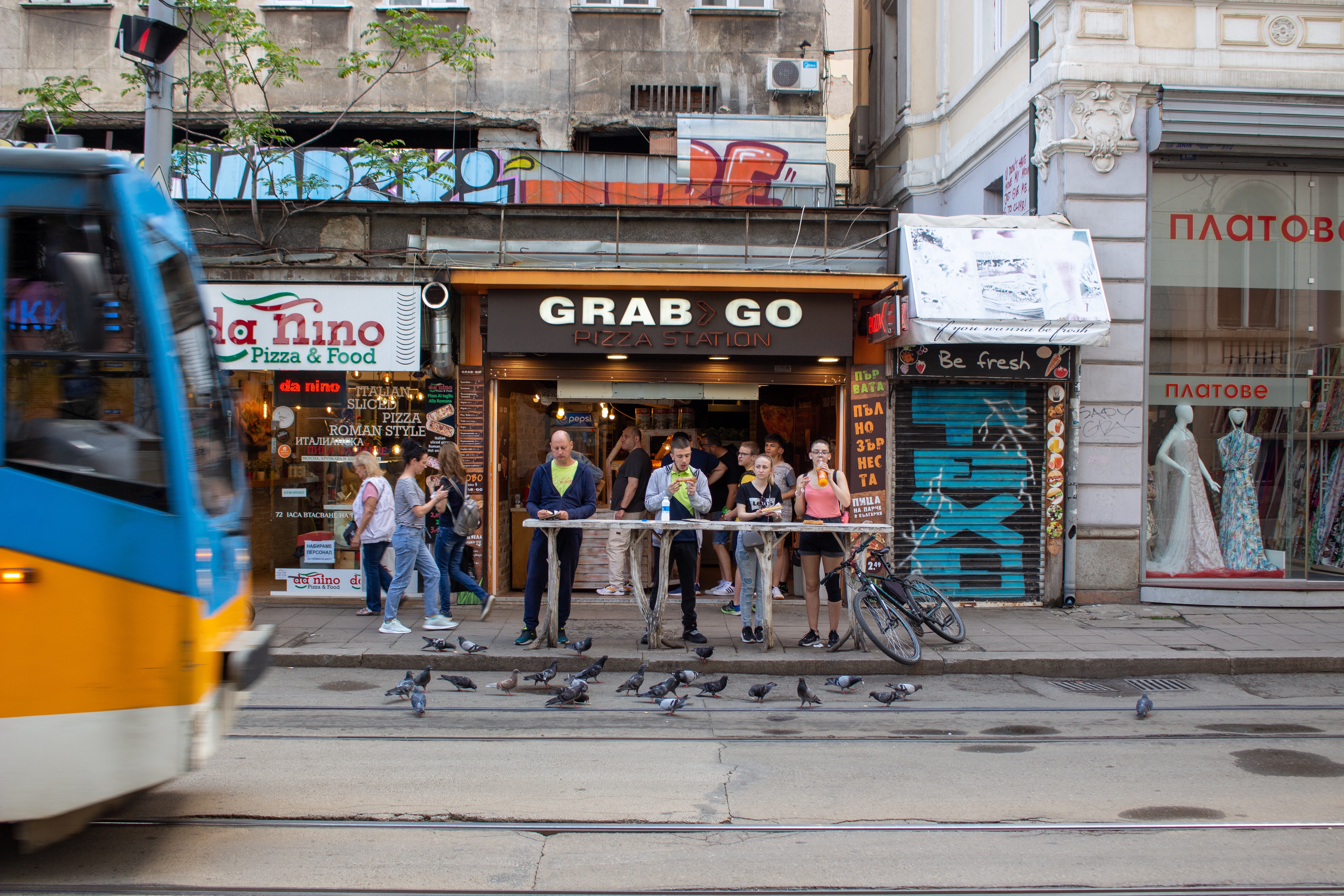
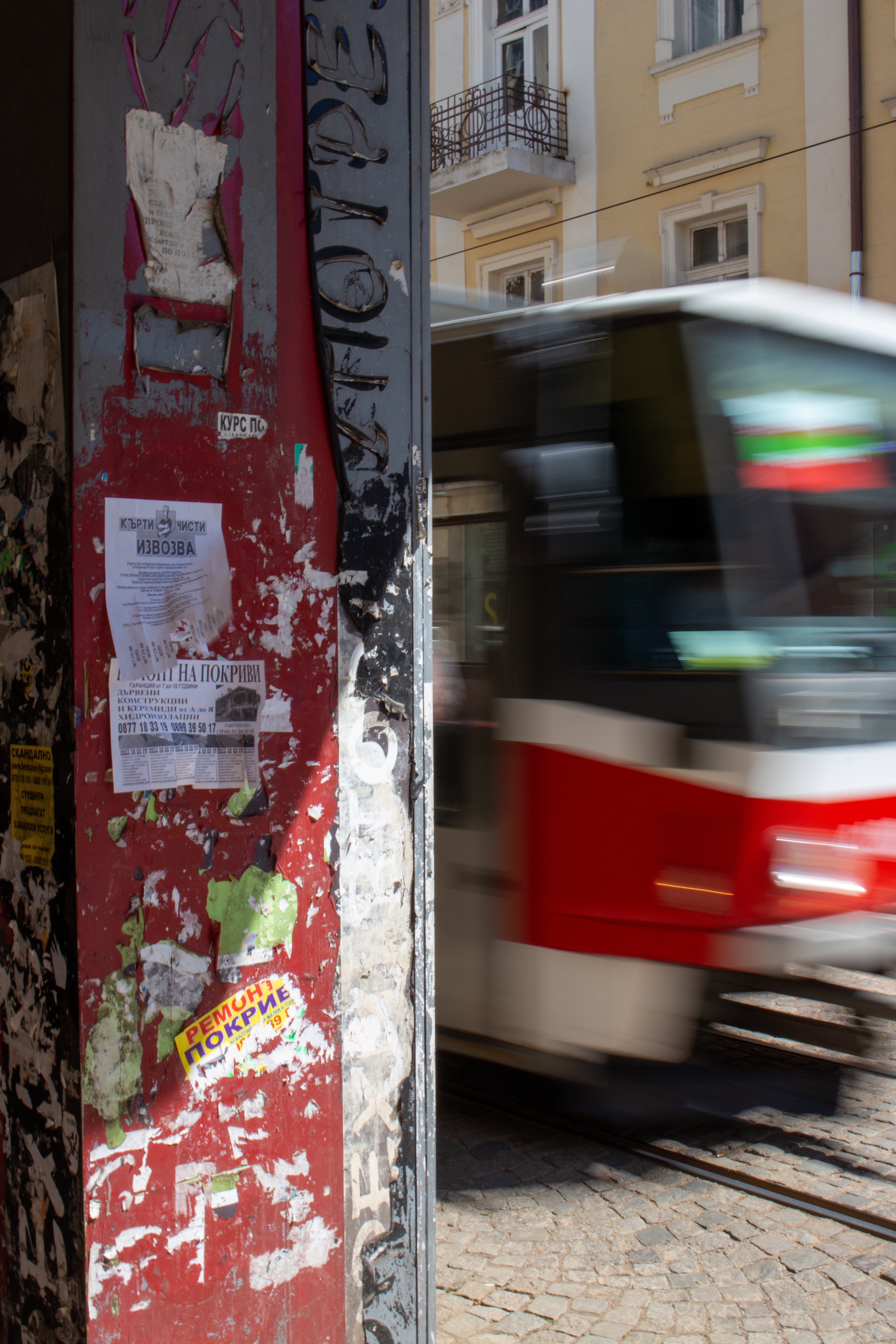
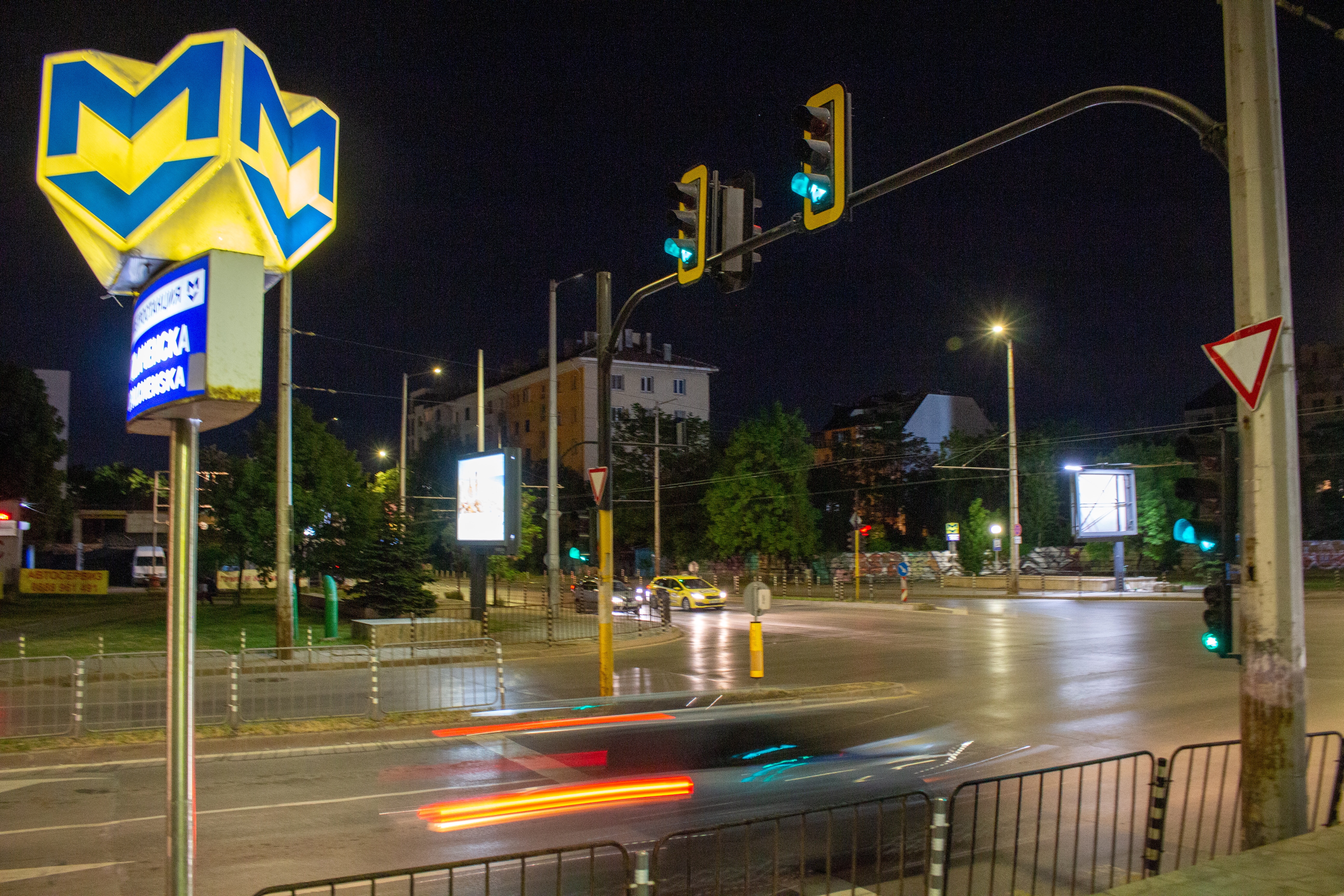
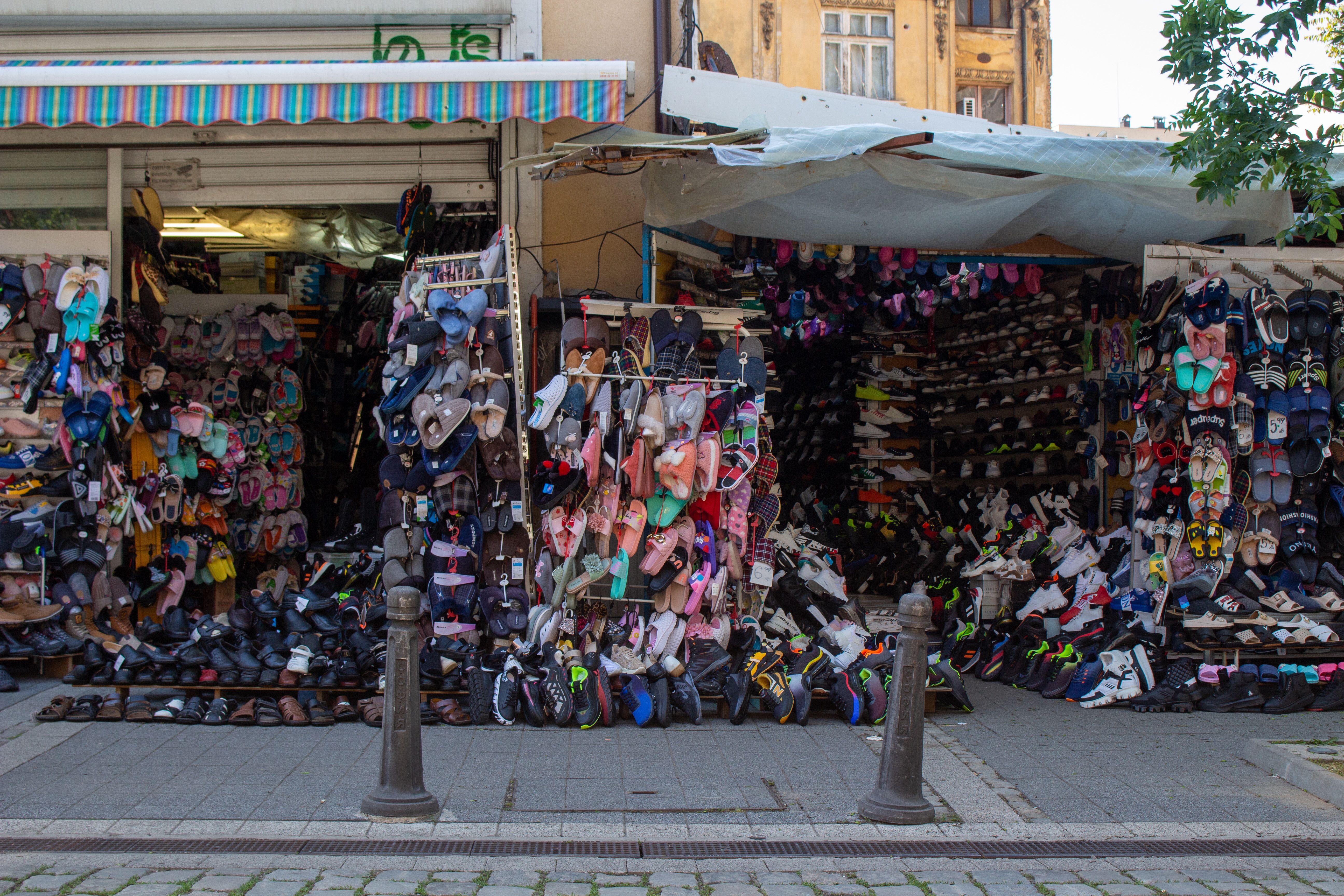
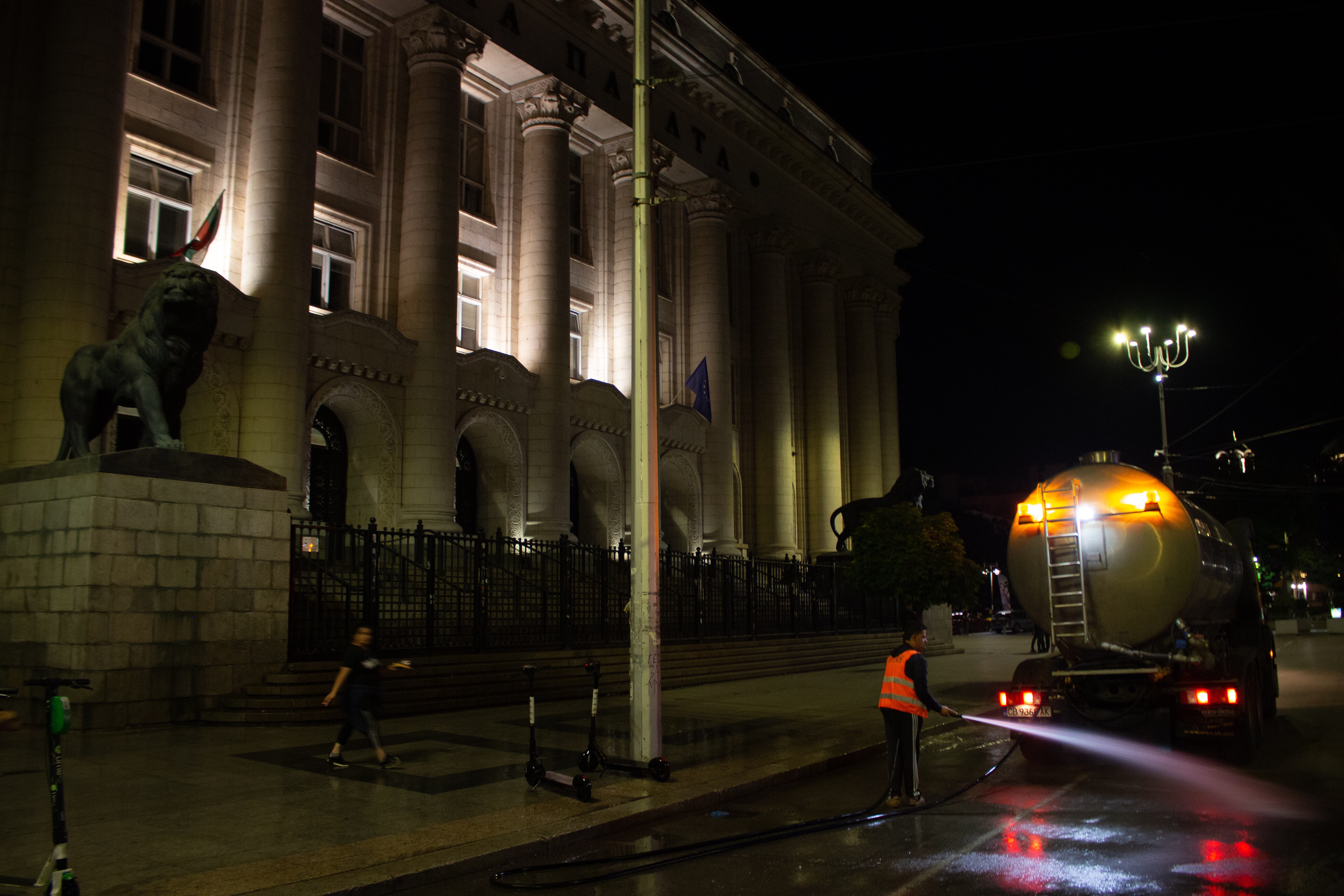
Sofia may have ancient roots from Roman times, but it feels like a city in its adolescence. There’s a buzz and a energy about the place, from the noisy traffic ploughing up and down six-lane highways, the pizza and kebab joints serving street food on each corner, through to the construction sites that seem to be on every block, with snazzy new apartments going up alongside battered old, crumbling communist era buildings.

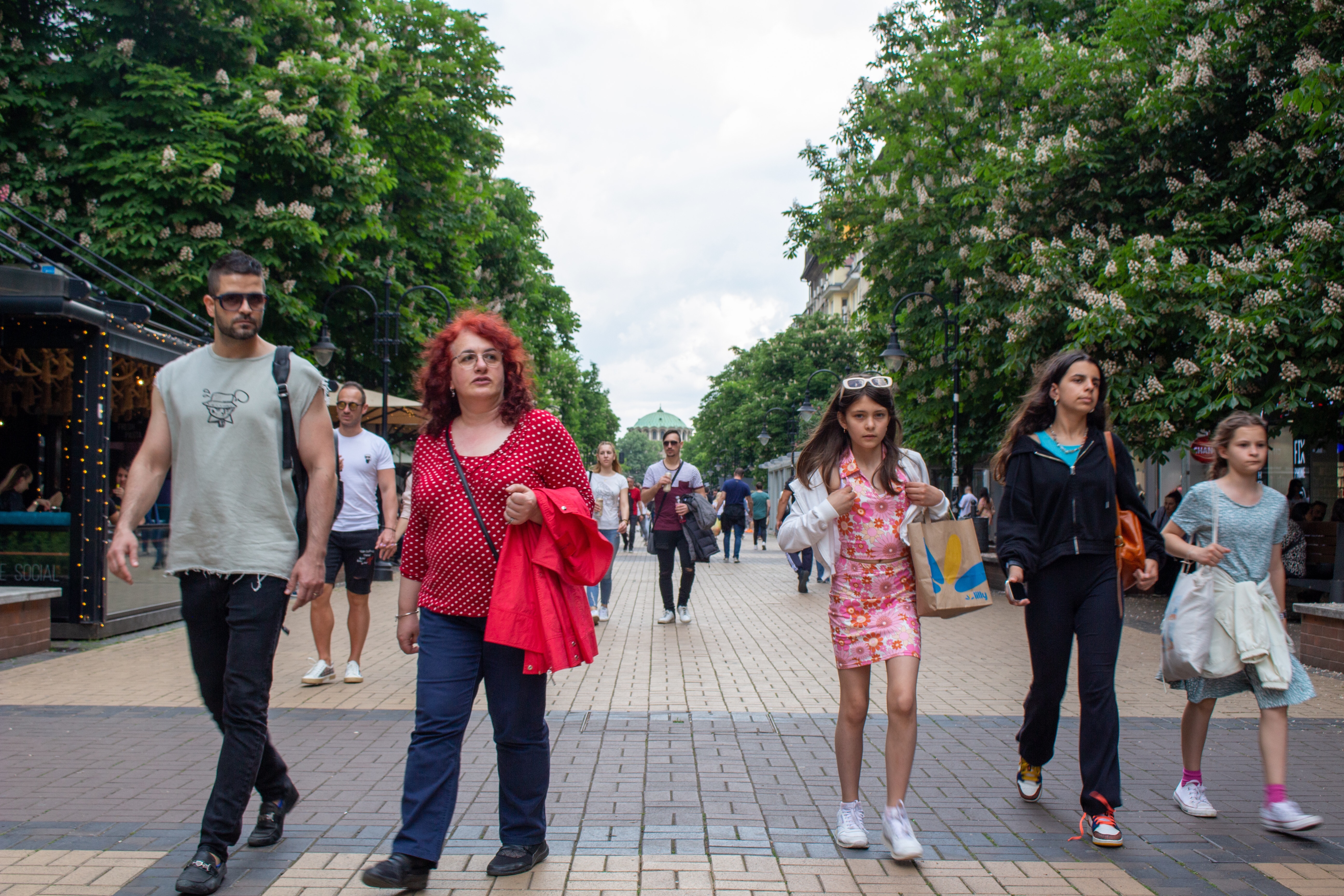
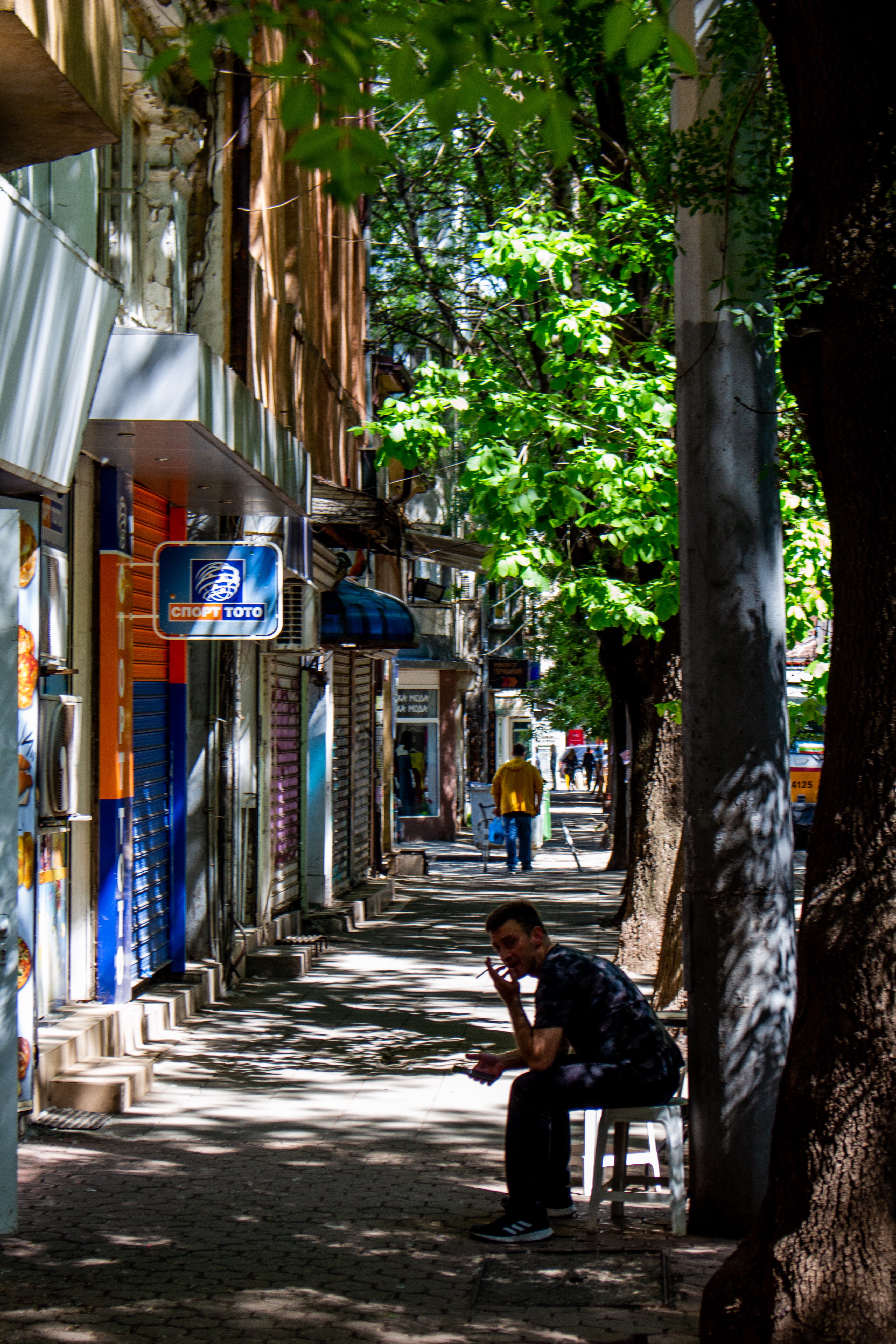
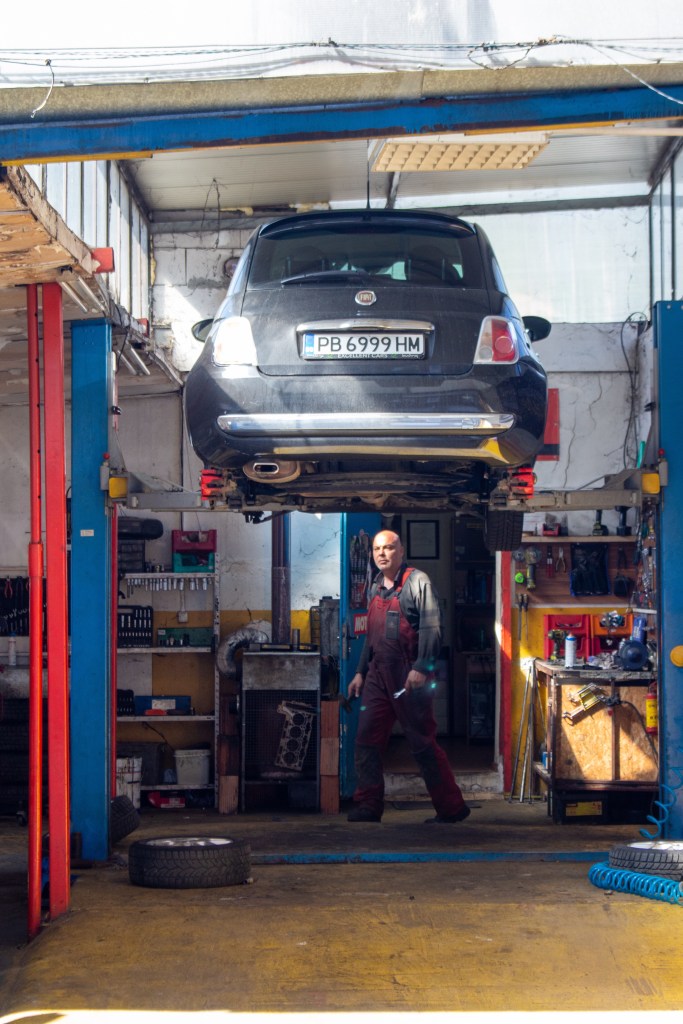
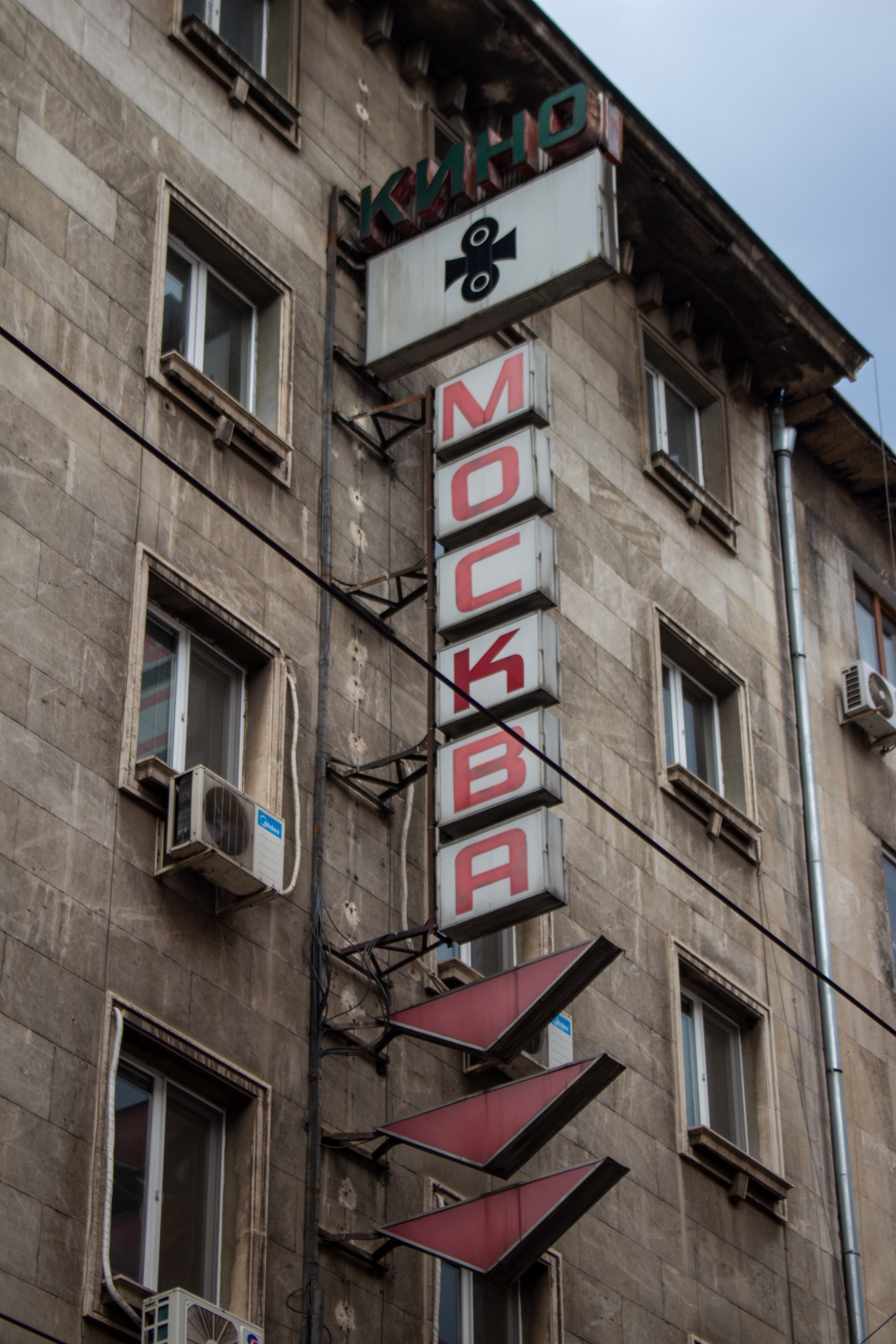
That gave me the opportunity to explore the city over a few days with my camera in hand, booking into a small hotel on Boulevard Todor Alexandrov, where the room was big and the rates were good, capturing what I found in to three groups of photos: People, buildings & streets.

People

Buildings

Streets

On trucks & cows

Wednesday 11th May

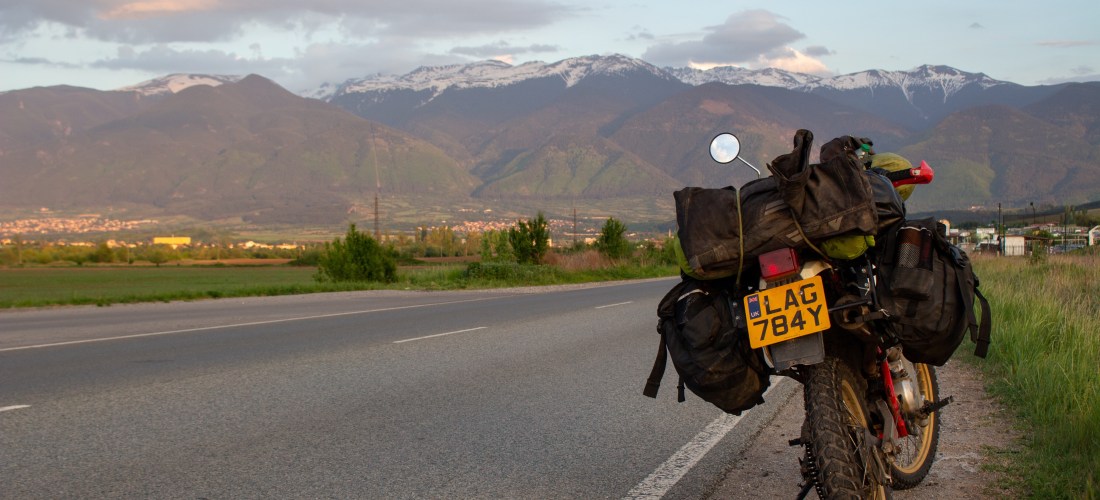
Borovets, Rila Mountains, 70km south of Sofia, Bulgaria

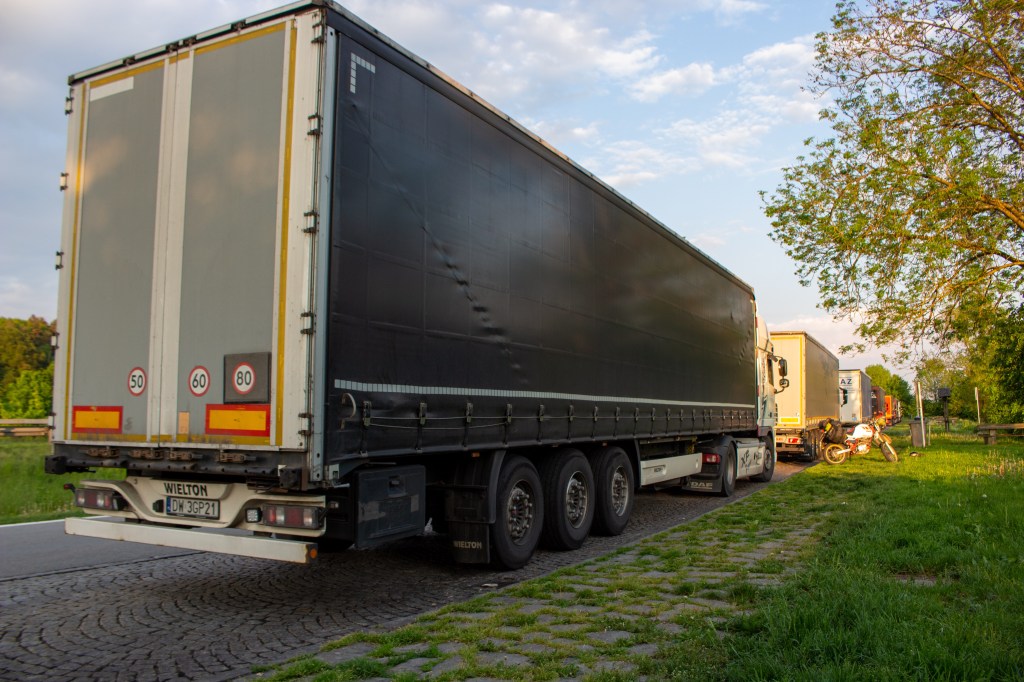
After three long days and some 1,500 miles in the saddle from London, I concluded that the convoys of trucks ploughing the motorways, autoroutes and autobahns of Central Europe behave in a very similar way to cows.

My plan for this trip was quite simple – kick off with some big miles to get to south-east Europe, to then get a boat from Burgas on the Bulgarian Black Sea coast to Batumi in Georgia for a three month loop around the Caucasus republics, and then back home, spending time in eastern Turkey and the Balkans en route. And I wasn’t expecting things to get too interesting until getting there to be honest.

There were two things about the trucks that reminded me of the cattle – first, and the most obvious one, is their huge, lumbering nature, which their drivers all too often either didn’t know or didn’t care about, like the proverbial bull in a China shop, their size placing them high-up in the Darwinistic pecking order of motorway travel. That much is the same as back home.

But there was something else too. The closer you get to Central Europe, then so their number on the road grows in proportion to other vehicles, causing them to congregate in long convoys in the slow lane, nose to tail – just like a herd of cattle sauntering down the road, sometimes content with driving in line astern, other times jostling for position with one another, like some kind of heavyweight, real-world version of Mario Kart.

Passau, Germany

There’s the thrill of seeing an evolving, vehicular smorgasbord of different numberplates and trailer markings, which grow in diversity the closer you get to Europe’s main east-west motorways in south Germany, Austria and Hungary, Dutch, Polish, Spanish, Hungarian, Slovakian, Ukrainian, Bosnian, Czech – you name it, it’ll be there.

It gives you the feeling that you’re on your way, with whatever opportunities might lie on the road ahead – one of the great joys of travelling by motorbike. Riding motorways can be (and usually is) dull but spending days riding in the thick of Europe’s trade arteries fires the imagination and fuels wanderlust.

Chemical tankers from the Rhineland, washing machines going to Serbia, Bulgarian car transporters packed with second-hand cars – and of course, the ubiquitous courier trucks going to and from any place you can think of.

Then there’s the assault on the senses.

Approaching these convoys to overtake, the wind buffeting starts about a hundred yards out or so, with the airflow from them reverberating around the helmet, like leaving the car window open when driving quickly.

The buffeting steadily increases as you close the distance, going from the one side of your head to the other, eventually beating at your upper body, grabbing at any loose clothing, causing the unfastened collar strap on your jacket to snap with a whip-like crack against the side of your helmet.

As you pull alongside, things move up a notch; the roar of the trailer wheels on the road, along with thrill of being almost close enough to touch them. You can smell the diesel, oil and exhaust fumes in your face. You’re deafened by the roaring wind and slipstream, the monotonous drone of engines and endless clattering.

When you reach the front half of these behemoths, forty tonnes of flat-faced truck at fifty miles per hour doesn’t so much carve through the air as bludgeon its way through, forcing it out from the front to the sides in an invisible v-shape. Ride too close and at too similar-a-speed and you can feel yourself being pulled into the side of the wagon. A nudge to the left to give you a bit more space, and a few extra revs up to 4,000 rpm, and you’re through.

Finally, there’s the sense of place. Despite the ever changing landscape surrounding it, whether it be winding its way through the wind farms of Flanders or crossing the oil seed rape fields in the plains of northern Serbia, the motorway is a constant, with a personality of its own.

A fairly boring one, admittedly, but enough to provide the kind of insight that I hadn’t really appreciated before. Motorway life is a destination in itself.

Passau, Germany

The truckers at rest stops living on the road, the families in cars, the caravans, other motorbikes, the flash cars, the old cars, the boring cars. The number plates, makes and models might change, along with the language on the road signs, the currencies used or the food served, but formula behind the paraphernalia is a constant that acts as a platform from which you can observe these changes as they happen, rather than a boring bit of the trip that is to be written off.

This part of the trip was meant to be more of a liaison, a means to an end which was the ferry terminal at Batumi in Georgia. Maybe it’s just the relief finally getting away on a big trip for the first time in 6 years, but even writing as someone who has many motorway miles under my belt from previous trips, it’s already been a bit of an adventure.

Next stop, Burgas.

Rita Mountains, Bulgaria

Thru or around?

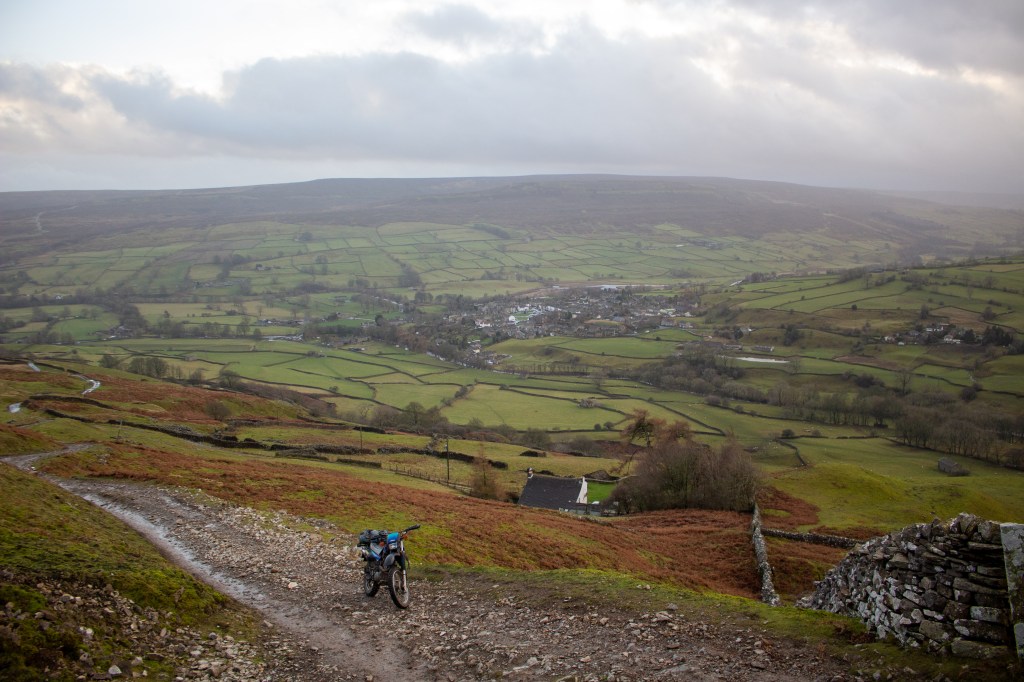
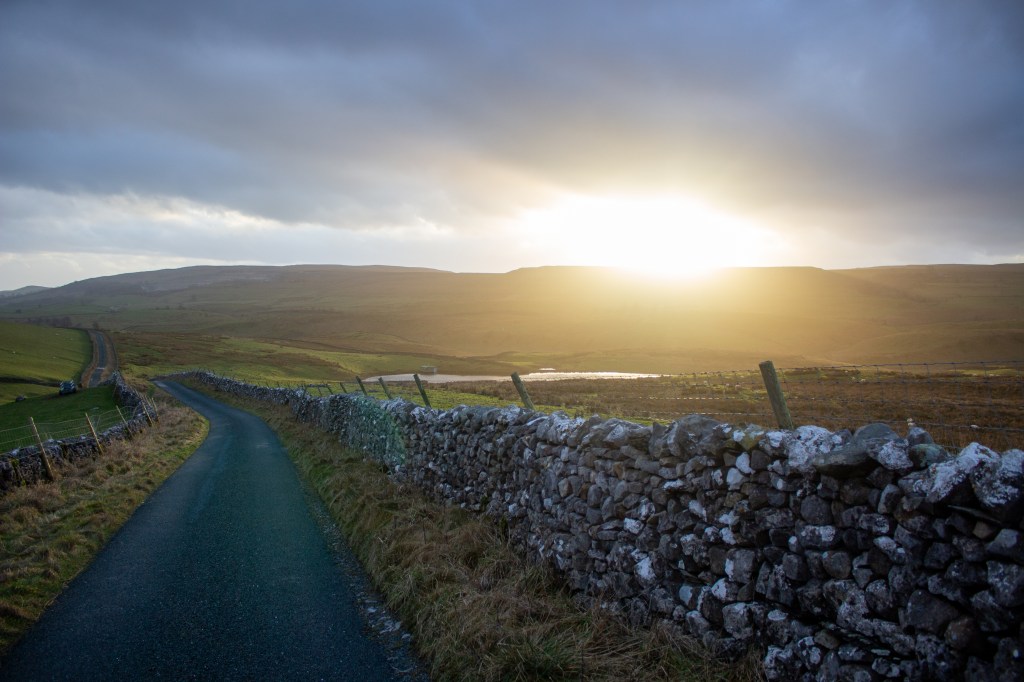
This Christmas, with my planned trip Morocco and then Spain trips canned due to omicron-induced border closures, I pushed my 1992 black XT600e into the back of the van and headed to north Wales for four days and then the Yorkshire Dales for a week.

One of the great things about trail riding nowadays is that’s it’s so easy to get started; all you need is a motorbike, a smartphone with a handlebar mount and a good old fashioned dollop of ‘get up and go’. A myriad of different routes in countries around the world have been shared online through apps like Viewranger/OutdoorActive and WikiLoc, which have made byways that were once only known to local trail riding groups accessible to people anywhere in the world. The Trans Euro Trail has also been a great force for opening up the hobby too, providing an easy and valuable reference for even more experienced riders to dip in and out of.

This is pretty much how I learnt to ride off-road after coming back from riding London to Sydney five years ago. But whilst it was convenient for easily finding places to do to practice riding, I quickly grew bored of simply following others’ routes. I’d often find that I’d get to the end of a ride with an unsatisfactory feeling, like something was missing. This, of course, is why a lot of people caution against simply using a GPS or Google Maps to navigate on long-distance bike trips, whether they are on or off-road. 

As my skills and confidence in riding off-road have improved, then so has my ability to engage with my surroundings. I’ve found that planning and taking my own routes on a map is a good way of tackling that lack of satisfaction that comes from just following others’. Taking the time to to do so means you’re automatically far more invested in the ground you are going to cover, as the contours and symbols you consider on a map beforehand then come to life in the real world as you ride through them. At the same time, more confidence and skills on the bike doesn’t mean you’re spending all your time staring straight ahead or wrestling with the ground conditions. You have a greater capability to engage.

There has been a further iteration of this that I have wanted to try for some time. Almost all of my riding has tended to be ‘thru routes’ that have some final destination in mind, but this Christmas, I decided to take a different approach; instead of a route where I stopped and stayed at different places each night, I decided to stay in one location, establish a base and do a series of trips around the local area to and from there.

The purpose of this idea was simple – to spend more time focussed in one particular area to explore it via trails by bike to its fullest extent, to get a better sense of all that is in that area in terms of both physical and human geography. And of course to enjoy riding those trails and to get some good photos too.

This worked a treat, particularly in the Yorkshire Dales, where I had a full week based out of a cottage in Low Row, in Swaledale, though the preamble of a couple of days’ riding in Wales also came up trumps too.

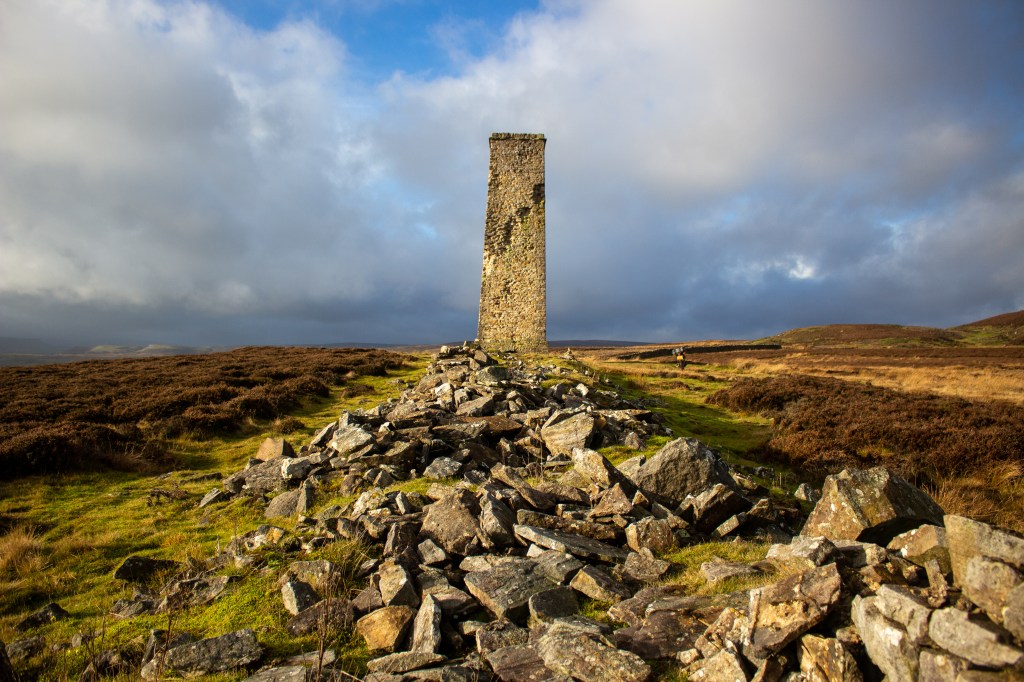
Using OS Maps on OutdoorActive, I plotted a series of loops each night for the following day, concentrating on one area at a time. Whilst I’ve ridden the trails in the Dales before, including the Trans Euro Trail section, if you asked me to place them on a map I couldn’t have done so. I couldn’t tell you where the Roman road out of Bainbridge was, where that route I did a few summers ago with a big chimney was, which ended in village with a castle. And I certainly didn’t know where Swaledale, Wharfedale, Ribbledale or Widdale were. Which is a shame, because I must have ridden in the Dales at least three or four times in the last five years.

This was the rationale behind the change of tack. And to my surprise, after seven days I’d done maybe only two-thirds of the byways and unclassified roads that are in the national park; I thought there’d only be a few days riding at most. I left knowing I could have quite happily done another few days’ good riding but also having felt like I’d properly explored the areas I’d been to.

So, what did I take away from all of this?

Tension between the journey and the destination. This way of doing things obviously eliminates the inherent tension that exists with any ‘thru-route’ between focussing on a final destination and ensuring your seeing/appreciating everything you can see in a given area; you’re not simply leaving behind one area and moving on, never to return, but knitting them all together over a number of days. You have more discretion about how much time you can spend in places as well, both in terms of not having that pressure of a final destination and in terms of knowing that you’re concentrating your efforts in a smaller area.

Greater involvement in the geography. Both through the route planning process and the actual of practice of riding the bike, you’re obviously much more involved in the geography on the ground because you’re going back and forth, exploring the same area. Plotting your own routes beforehand, rather than just winging it entirely, allows you to get a feel for that ahead of time but then when out riding you’ve got the freedom and the time to take in the landscape you come across and what it has to offer because you don’t feel like you’ve got be somewhere in the same way as with a ‘thru-route’. See point 1 above. That also extends to how different routes and loops link together in the grander scheme of things, giving you a deeper understanding of the area.

It allows you to establish a base. This is useful from both a practical and comfort perspective, particularly in winter. In the most basic, practical sense, I had my van with me with a load of tools and spares which was useful in Wales after damaging the bike on the infamous ‘Bastard Lane’ just north of Machynlleth. Having a roof over my head allowed me to plan better for the next day, both from a comfort perspective and from a growing familiarity of the local area perspective (see point 2). Having this base provides a consistent, central focus for where you plan your routes.

    I came away with a far more satisfying experience than I have had on similar trips, despite the seemingly non-stop Pennine rain over the Christmas period, feeling like I’d taken an approach that struck a far better balance between having a sense of direction and getting the most out of your immediate surroundings. I felt like I’d properly explored the Dales in particular, getting more out of the trip than the others I’d done there.

    The next question, as I think towards when cross-border international motorbike travel will become easier once again, is how does this translate when planning longer, multi-day or even multi-week trips? Will I simply continue this approach, perhaps moving on every few days with no final, grand destination in mind but just decide on an area to explore? Or do I strike a balance between this way of travelling and the way I’ve been used to, and set that destination with an ambition that’s more limited than it might have otherwise been, to give me more time to spend en route?

    Green-laning the Maritime Alps

    Last summer, I spent two weeks checking out the trails in south-east France and north-west Italy in the Maritime Alps, before heading on to the Slovenian section of the Trans Euro Trail.

    Everyone in the UK seems to go to the Pyrenees to ride trails. You hear very little about people doing the same in the Alps, possibly because it is more restricted and because it lacks the convenience of an overnight ferry to get there.

    Nonetheless there’s loads to do – I left after 13 days happy with how much I’d done but if I’d wanted to I could have found more. The majority of riding is on tracks that vary from fast and easy (light gravel) to not so fast and tougher (big rocks/boulders/broken up ground & ruts). Only about 10% of the trails I rode were slower, more technical single-track.

    The nav action

    The Alps section was great – there are some fantastic trails in this part of the world and they’re not that too hard to find. My highlights were:

    1. Col du Parpaillon – and site of the world’s scariest tunnel
    2. Via del Sale – 50 miles of non-stop track heaven
    3. The long ascent up to 2800m to the iconic Forte Jafferau.

    The Slovenian Trans Euro Trail (TET) was good fun too – but it lacked any stand-out character. There are some very technical bits, which are similar to the trails you get here back in the UK, and a lot of gravel through woods, which I’d got bored of towards the end of it.

    For planning/navigation, I used a mixture of paper cycling maps (1:250K at least), the WikiLoc smart phone app and the TET Italy Slovenia routes on the app to navigate, using an old iPhone 5 that was hooked up to the bike. https://www.dangerousroads.org was a really useful if slightly melodramatic sounding resource for finding out where to go, which you can then plot on paper maps.

    For France, the 1:250k IGN paper maps are good. For Italy, the Michelin one I had lacked the same level of detail at that scale but I saw some great 1:50k scale walking ones for sale in the Gran Bosco area that did the trick. The shiny map for Slovenia that I bought at a petrol station was a waste of time. Next time, I’d invest more in smaller scale maps.

    It’s worth looking at the detail of the WikiLoc routes and double-checking that the route does go off the tarmac and creating a short-list the day before. I tried to link as many of them up as as possible. Via del Sale was one of the highlights of the trip – the actual route isn’t that easy to find on the ground, perhaps due to a lack of detail on my paper maps – but thanks to WikiLoc I was able to simply follow a route that already been shared. This was the same with the long ride down to the Italian border from France, which ended with a good few hours of fast dirt tracks into some very remote areas, going over the final hills to the border and into Italy at Olivetta.

    The old iPhone worked OK 60% of the time but did prove to be unpowered and unreliable in the end – being so reliant on it for navigating, it’s not worth scrimping on this sort of thing. On one occasion it left me in the lurch, by freezing whilst high up riding one route – I took a wrong turn or two and ended up in a slightly unpalatable situation on some very steep single track, high up in a remote section where I certainly didn’t want to be solo with a loaded up motorbike. Since the trip, I’ve ditched the iPhone and bought a £70 Motorola from eBay and set it up with all my apps – it does the job perfectly but does tend to run out of steam after recording your route for more than 5 or 6 hours.

    Pushing an old-timer – the bike

    The third day in, I found myself wondering which would be more knackered first – me or the bike. My XT600Z Tenere is real mongrel – most of it is a 34L model, the original first-edition 1983 version of the Tenere that appears in the iconic early ‘80s photos of the Dakar Rally. But the engine is from the final model XT600E (i.e. a 4PT model). The wiring loom is from sometime between 1988 and 2000. The carbs and front forks are from 1984.

    Having ridden the newer 2009 version of the Tenere from London to Sydney on some pretty tricky territory before greenlaning it back in the UK, I’m under no illusions; the older version is a far better bike. It’s 40kg lighter to start off with. What’s more, on the newer bike that 40kg is high up, making her prone to toppling over.

    The older XT was a great choice for this trip – a true all-rounder that was fun to ride on any terrain. It hoovered up most of the trails put in front of it, with the exception of a few bits of the Slovenian TET. For 10 of the 13 days I rode trails, typically for more than five hours off asphalt with liaisons between. The route covered everything from the technical mountainous trails in the foothills of the Julian Alps in Slovenia, to the heavy ruts and big boulders of the Col de Sommeiller and the fast, light gravel forest tracks of north Croatia. The other three days were sat for 9 hours+ on motorways with the throttle pinned in top gear at 80mph.

    There were only two negatives. Towards the end of the trip, the float needle valve went in the carb to the point that the bike was leaking fuel even with the engine running. Second, the lack of a fairing and an off-roading gearing meant the 500 mile schlep down the autoroute from Calais to Briancon was particularly onerous.

    The gear

    Silvermans have some cheap heavy duty army canvas panniers, which I used on a Hepco & Becker rack. For £30, they’re a bargain – they’ve got lots of straps and loads of room. But they do need strengthening around where they attached to each other as they became worn – less of an issue if you are just riding tarmac, but if you’re throwing the bike about on the rough stuff, then the bags bouncing up and down put extra strain on them. I’m not sure what to do about that for the future TBH – or indeed if anything can be done. It seems a shame to write them off, because otherwise they’re a great bit of kit.

    The tank panniers I got from Wolfman were good, and I was happy enough using them in lieu of a tank bag. You do have to ride somewhat with legs akimbo but that doesn’t take much getting used to. One advantage of having a tank bag though might be the ability to read maps whilst on the move, but I plan to try out simply putting a normal map case under a cargo net on top of the tank instead.

    I ran TKC80s front and back for the hoops, and by the end of the first week I’d pretty much burnt through the rear one. I’ve been using them for the last couple of years and whilst they’re good, for a trip this length or longer I’d probably go with K60s (non-Scout) or perhaps some longer-lasting Karoo 3’s instead.

    All in all…

    …a really fun trip, and I’d suggest spending a week or two riding trails in the Maritime Alps to anyone. Having to fly home whilst the carb got repaired (or not) in Morzine was disappointing but given that the bike had been barely used since it was restored by the previous owner it’s not a surprise that something like might happen. This was my first ‘proper’ trip since landing back from Sydney two years earlier, and it left me looking forward to the next.

    Solo overlanding skills

    This blog post originally appeared as an article in the November/December 2018 edition of Adventure Bike Rider

    We often talk about adventure riding in a pretty generic way. But long distance overland solo riding is one area that perhaps merits some special attention.The attractions of going solo are obvious – the freedom to ride when, where and wherever you want; you’re arguably more approachable and there’s a greater degree of personal challenge involved that can be hard to find when travelling with a group.

    It’s all about the skillz

    Clearly there are also additional risks involved. Riding solo from London to Sydney in 2015/6, I learnt almost all of my lessons about long-distance solo overland travel in the hard way – by trial and error on the road after very little (i.e. no) pre-departure preparation, with the help of others I met along the way and with a big dollop of good luck. But it’s since learning those skills that I realised how much more I could get from riding solo as a result of having them.

    So here’s the top things I think are worth focussing on in the run up to doing a big trip on your own:

    1. Go green laning. The UK might not have horizon busting blue skies with long tracks going off into the distance, but we do have shorter, more aggressive and technical lanes which are great for developing the kind of off-road skills to give you the confidence to get off the beaten track.

    Continued practice, not just attending a one off training session, is key. Riding in a group will encourage you to move out of your comfort zone, expanding your skills which you can then use solo. It can also be an invaluable source of advice not just on riding but also on getting your bike set up right.

    However, group riding in this way shouldn’t be viewed as the same as solo riding. That particularly tempting BOAT that goes down into a leafy, green abyss might be worth a punt when there’s others around, but on your own you should think more than twice. The Number 1 rule always being to ask yourself – how would I get out of there if I needed to?

    Finally, once you’ve done all that – practice with luggage. Take the time to re-learn those skills and understand your limits with the bike as it will be when you travel, loaded up.

    2. Get mechanical. Mechanical self-reliance to do even the most basic things will allow you to deal with problems preventatively rather than reactively. The latter tends to be more expensive than the former, both in terms of time and in terms of labour and parts. All three cost money.

    In less visited places, trusting others to repair your bike by default, even when they have the best will in the world, is not the best idea. Few mechanics understand the difference between repairing a bike for a customer who can pop back into a garage if a problem occurs again, and repairing a bike for customer who is going to ride thousands of miles where the distance between workshops for modern bikes is measured in countries rather than streets – and whose life may well depend on the bike functioning right. So pick carefully who you let work on your bike. Ideally watch them do any repairs. Find out what they actually do to your bike, because often that might be related to the next problem which appears.

    Learning to deal with one mechanical problem will give you the confidence to deal with a dozen others. There’s a logic to most bike mechanics, it’s just a case of finding out what that is. Even if it’s not your natural forte (it certainly isn’t mine), persisting with it with your Haynes manual as a bible is well worthwhile.

    3. Getting back to nature. Being self-sufficient on the bike is key to wild camping – ensuring as a matter of course that you ride with enough food, water, petrol and cash for a couple of days will give you the peace of mind not to pass up that killer camping spot with an amazing view. If you don’t, then dropping a pin on Google Maps or maps.me to mark the spot to return to is always an option.

    Wild camping takes a bit of practice – there’s the old adage about taking 2 or 3 turns off a main road to ensure you’re not disturbed that’s true. Knowing your sunrises and sunsets are important, – starting to scout for options at least an hour before sunset is a good rule of thumb. Sod’s law dictates that often you’ll camp one place and find an even better spot 5 minutes around the corner the next morning when you’re leaving – scouting minimises the chance of this.

    Apps are also helpful – iOverlander and WikiCamps in particular are a really good resource for spots that other overlanders have used.

    4. Maptastic. Following your turn-based GPS isn’t going to get you the best of the experience. It has its place – in towns for example. But looking at a map and learning how to read the landscape is important – what route is going to give you the best twisties, the best trails and the best views? What are the physical features of the land which point towards the likelihood of finding something unexpected? There’s a bit of a knack to it.

    Paper maps are best, a 1:150,000 cycling map is often ideal but larger scale maps up to 1:500,000 can do the trick. However carrying around a whole library of paper often isn’t practical or, if the mapping data is sketchy, worthwhile. Buying maps can also be expensive too. Two good alternatives for your smart phone are Google Maps, which has a terrain mode, and maps.me.

    Before you hit the road…

    All of these things can make a big difference and really allow you to reap the benefits of solo overlanding. Of course, part of the adventure is to learn many of these things yourself but once you do learn them, you do realise how much more you can do in future.

    This is particularly the case as since adventure riding has grown more popular in recent years, so has the multitude of kit available to us. Having the right set of skills is arguably more important than having all the ‘right’ kit – and will give you just the same, if not more, opportunities.

    Ed Gill rode solo from Buenos Aires to Lima on a Triumph Bonneville in 2015 and then from London to Sydney on a Yamaha Tenere XT660Z in 2015/6. You can find out more about Ed’s trips, including photos from his trips, at http://www.facebook.com/wherenextbarney.

    3 lessons from London to Sydney

    November 2017. London, UK.

    It’s always tempting to be more than a bit cynical about the raft quotes about the transformational nature of travel that you can find within about five seconds of scrolling through Facebook, Instagram or Twitter.

    But here’s the thing. For many who decide to pack up their bags and yomp off to lands far away, there’s no denying that there’s often a strong thread of romanticism mixed with a desire to disconnect in the hope of returning to see things in a different way. 

    Almost a year ago I decided to write a few blogs as I slowly digested the lessons I learnt from riding solo from London to Sydney. One of the ones I decided to write about was the lessons that the trip taught me about the world around us, particularly given that a big part of the reason I wanted to do the trip in the first place was to experience that.

    40,000 miles, 26 countries and a year on the road solo is a lot to digest, I can tell you now. As in 50kg t-bone steak with a mountain of chunky chips level of digestion. 

    Once home how you feel, behave and react to things changes. Things that once seemed solid, seemed surefire – you’re not so sure about anymore. Spending so much time on your own means you know yourself far better than before – and that level of awareness can be hard to handle at first when you’re thrust back into ‘normal’ life. Overall there’s a sense that your world view and sense of what you stand for has been deconstructed and that you’re going through a process of putting it back together again. 

    The good news is that when you do so, it’s far more robust then it was before – the balance is well in the positive.

    18 months on I reckon I can boil those lessons down to three things which seem to be the most lasting impressions I took away from the trip:

    1. The depth of our diversity and it’s contradictions. If you find yourself having lunch at a bamboo shack of a school in the middle of nowhere in the Burmese countryside that’s run by a bunch of Buddhist monks for orphans from some nearby mountains, there’s a good chance that at least half of them will want a selfie with you and that within 5 minutes they will have taken advantage of the 5-bars of 3G signal (that’s infinitely better then that in Central London BTW) to befriend you on Facebook and upload said selfie.

    From smartphone the wielding, selfie-obsessed teenagers of Pakistan and India to the Italian, American, Indian and even German restaurants that pepper the streets of Bishkek, and from the most smartly dressed policemen arguably being the most corrupt (thanks Thailand & Cambodia) to the simple reality that the countries that we’re told are the most dangerous are often the most welcoming, the trip gave me above anything else a real sense of the richness of the diversity of the world we live in – and the contradictions that seem to result from that.

    Except they aren’t really contradictions are they? They’re only that if you judge them by the pre-conceptions you had beforehand – which says something in itself about the value of keeping a genuinely open mind.

    2. Our expectations frame our experiences of people. There’s a lot of stuff out there about how if you travel then you’ll suddenly discover that everyone you ever meet is nice and fluffy and that they will not want to take advantage of you. But the reality is far more nuanced than that. Humans are complex beasts and your natural expectations shape the experiences you have.

    So if your default mindset is to be negative about the motivations of others then you’ll find that when you’re on the road then on balance the majority of the time people are pretty cool, friendly and helpful. Given that, you’re more likely to be pleasantly surprised – which is nice.

    However if your default mindset is to be positive about people, then you’re less likely to be surprised by that. The danger is that if you drink the cool-aid of others too much, then there’s a chance you’ll come away disappointed when, as inevitably happens, you find not everyone shares that positivity. 

    Either way the world around us is pretty balanced – there are dickheads and there are nice people. But there are dickheads who can behave like nice people and there are nice people who can behave like dickheads. Sometimes you’ll get it right, sometimes you’ll get it wrong in terms of how you handle these people (I did) – but the trick of the trade is to go about the people you meet in a way that doesn’t close down the opportunity of a good thing whilst not leaving yourself open to be taken advantage of.

    3. It’s not just about the size of difference in opportunity but it’s also about the nature of it. In the West we’re brought up to recognise and think about opportunity typically in economic terms (i.e. our ability to get an education to earn money and the opportunities that provides).

    Obviously that’s the one of biggest parts of opportunity  but it’s only one part – culturally in more socially conservative countries the opportunity to break the mould and not focus on the responsibilities of work and family and do something different, like travel, is equally a huge thing.

    Social norms can limit opportunity in the sense that not only do they not support people to do things that break the mould but they often actively discourage it. Emotion and the pressure to conform can be just as disempowering as lack of economic opportunity.

    What’s more, for many people from non-Western countries getting a visa for a specific country is simply not an option – we in the West like to whinge about the bureaucracy of applications for China or Central Asia but those requirements tend to be just paperwork. We don’t have to demonstrate that we have a certain amount of money in our bank account which might be simply impossible to achieve. We don’t have to prove our ability to speak a foreign language. And if we chose to migrate to another country, we generally don’t face the same difficulties of finding some way of getting our family to join us. 

    The very few people I met doing some kind of road trip themselves – at whatever scale – who had had to overcome those hurdles have far more in common with adventure travel pioneers yesteryear than people like myself, who have had a whole basket of opportunities presented to them basically through an accident (literally, if you speak to my mum) of birth .

    And the one overriding thing, above all else? Luck. How much just having the chance to hit the road and experience all of the above in the first place is down to the luck of the draw and the opportunities you get from that. Not just recognising that but really appreciating is probably the most important lasting thing without a doubt.

    “It was about finding something new, something outside of our comfort zone and it’s funny that a simple machine like a motorcycle can really take you away from your comfort zones and really help you focus on what’s really important.”

    — “It’s Better In The Wind”, Scott Toepfer

    Chasing Jupiter’s Travels

    March 2017. London, UK.

    At the end of last year I decided to write a series of blogs about some of the most important things I learnt from my ride from London to Sydney. One of the things I wanted to write about was what I felt my trip taught me about adventure travel. 

    Adventure travel never seems to have been more popular. In a large part this has been fuelled by more people undertaking adventures as well as the rise of social media as means of promoting them. By its very nature adventure is self-selecting in terms of the people it attracts – they are passionate about what they do, so its logical that social media has become a platform for people who want to share that and inspire others. From mid-week micro-adventures to grand inter-continental overland trips, there is a thriving community out there full of ideas, passion and inspiration.

    But there are the more traditional sources of inspiration. For my own adventures, Ted Simon – the author of Jupiter’s Travels – was the stand out one. It was reading his book over the winter of 2010/11 about his 4 year round the world solo motorbike trip in the ‘70s which first planted the seed in my mind of undertaking a big, overland journey. Because that trip was so iconic for me – as it has been for many other people, including Ewan McGregor and Charley Boorman – it framed my ambitions and expectations as my plans for adventure motorbike travel began to develop from 2012 onwards.

    His trip was as much a trip of exploration as it was of adventure. Aside from the fact that there weren’t that many people tooling around the world on a motorbike back then, Ted did his trip at the time when our day to day knowledge about the world around us didn’t come from constant, real-time contact with it. Rather than coming from Facebook, Wikipedia or the latest news alert, that knowledge came from books, tales and newspapers written, told and read after the fact. There was a gap between the world out there and the ready availability of information which created the opportunity for an adventure that can be harder to find on our world today.

    In 1974 the roads were rougher and, in the UK at least, our relationship with the world around us was arguably more straightforward. From an overland travellers’ point of view, it was an era when it could be said that there was greater stability in the international order and where the public dividing lines between societies and their politics were less blurred.

    Today the world – and the environment in which adventure travel is undertaken – has changed dramatically. Humanity’s diversity is no longer as polarised as it once was economically, politically or culturally. Whether it be due to international transport, technology or mass immigration and the multiculturalism that arises from that, any GCSE Geography student can tell you that our world is more inter-connected, more integrated and more inter-dependent than in any other era in history.

    But what’s important is that means that today we’re exposed to a far greater range of information about that diversity – through rolling 24-hours news coverage, online knowledge sharing and a constant stream of social media. Never before has so much information about the world around us been so easily and readily available.

    So what does this mean when it comes to comparing overland adventure travel in the world today as opposed to in 1974? And is it possible to undertake the kind of trip like Ted’s when circumstances have changed so much? 

    What I found was that whilst we might have more information available to us about the world, that doesn’t necessarily equate to a direct increase in our capability to understand. That’s because the sheer amount of information available to us has grown so massively that it has outstripped our basic human capability to keep pace with that. And that – I think – is what is at the heart of those who undertake similar trips today. The quantity of that information might have grown but the quality hasn’t. There is still a big world out there and adventure travel remains an important way to simply go there and see the most important things here and now for yourself, and share it with others too.

    Even though there has been this explosion in the quantity of information available, even that struggles to keep pace with developments on the ground. This is particularly the case as the lines between cultures and societies are now more blurred than ever – but often in a way that sits in harmony rather than in conflict with existing culture. From smart-phone wielding selfie-obsessed crowds in India and Pakistan, through to Facebook-posting Buddhist monks in an orphanage in the Burmese countryside and the huge new articulated Chinese trucks ploughing down the the freshly laid tarmac of ancient Silk Road routes, these things might not make news, journals or lectures but nonetheless they tell us a lot. They challenged my existing assumptions about the differences between societies and, in particular, the developed and developing world.

    This integration has another, less appealing aspect to it. There is a natural degree of uniformity that comes with it. Almaty, in Kazakhstan, is an obvious example, where with a friend we spent what seemed like hours trying to find some kind of local food amongst the rows of Italian, Indian and American themed restaurants. At the same time the freedom of travelling by your own vehicle brings home just how developed the backpacker tourist industry is and the detachment that naturally brings from the countries it exists in, to the detriment of both parties.

    When I left London in June 2015, I wanted to have the opportunity to see the world on my own terms with my own eyes. My trip challenged my own expectations from what adventure would bring me and made me realise how easy it is to make assumptions about our world at a time when it is a more integrated, messier place than ever before. 

    When I look back at the source of my inspiration in Ted Simon’s own travels, I don’t do so with the same kind of romanticised set of expectations that I might have once had. His trip was a product of his world in his time. What I learnt was that overland adventure travel is about the opportunity we have to see the world as it stands today – because what you experience will always be unique to the circumstances of that time.

    6 (and 1/2) months since touch down

    December 2016. Lulworth Cove, Dorset, UK

    ‘So what was the most important thing you learnt?’ asked the man opposite me. He was in his early fifties, bald and quietly spoken. We were sat in the smart offices of a Westminster recruitment agency. The job I was being interviewed for was big one. Suits. White shirts. Cufflinks. Ties. Black shoes, polished (his, not mine). The only reminders of my life on the road were a substantial (albeit now well-groomed) ginger beard and a scar on my right hand from the crash in Kyrgyzstan.

    My mind whirled. I hadn’t expected a question like that. Less than three weeks before, the wheels of the Philippine Airlines 777 flight from Manila had touched down on the tarmac at Heathrow. A week before that I had been shivering in the cold of the Snowy Mountains in New South Wales, soaked to the skin by the wet Australian winter, scoffing super noodles in my tent as the rain hammered down outside. I was living the final days of a full-on hobo lifestyle that was now a whole world away.

    ‘That it’s a really long way to Oz!’ I joked. He responded with an awkward smile and a tilt of his head to the right. He didn’t see the joke. And I didn’t get the job. 

    I’ve been looking forward to writing a ‘six months on’ blog post for a while. One of the things I love about writing is the process of playing with the articulation of thoughts, concepts and emotions, and when you return home from a big trip there is of course a lot to get your head around.

    Others have set out some of the lessons they learnt from travelling solo long distance overland probably far better and in more detail than I ever could. Tom Allen’s blog about cycle touring is excellent. Nathan Millward’s blog about The Hitchhiker (not online at the moment) and his book about his ride from Sydney to Alaska resonates more strongly than anything else I’ve read.

    And now it’s my turn. Not to show off, to relive past glories nor to somehow to find away to relate to people now that I’m back in ‘normal’ life. Don’t get me wrong – all of those things are temptations that you naturally succumb to at various points once you’re back. It’s all part of trying to fit back in. But one the most important lessons I’ve learnt since I’ve been back is that if you follow them, you’re on a hiding to nothing.

    No matter how often you talk about what you saw and experienced, it’s not enough. Those things are so far removed from any sense of normality and they are unique to you and you alone. Only other people undertaking similar trips ‘get it’. And even then each trip is as much about the person as it is about any geography they’ve crossed. Do it by all means with people who are interested, who care – to questioning friends and interested audiences. But enjoy for what it is and nothing more.

    That might sound like a negative thing but it’s not. There’s a quiet but warm satisfaction in realising that that’s OK – you don’t need anyone else to understand, or appreciate your stories because those things are for you and you alone – that’s why you set out on an adventure in the first place. I just wanted to sit in my bed in my old age, feel like I’d lived a bit and seen the world with my own eyes. And that’s what I got.

    So why write at all?

    There were three reasons why I decided to ride solo from London to Sydney: A desire to learn more about the world by seeing things with my own eyes; a sense of adventure, born out of a thrill of the unknown and a love of riding motorbikes; and a desperate need to scratch the itch that, at the age of 32, I’d never fulfilled my ambitions to see or experience the world in a way that I had always hoped to.

    Writing about these things is a valuable means of articulating and understanding what I learnt from the trip. Having spent some time with others who have done similar journeys, I know that I’m not alone in that. 

    But doing so publicly is important because there is the opportunity to contribute to a debate about adventure travel that already exists and one which I think is important we all hear more of. So I’m planning to write series of blogs drawing on my experiences, based around those three themes – about whether what I found on the road met my understanding about the world we live in; about what adventure really is about in a world there is more closely connected than ever before; and about how adventure met my hopes and fears.

    2016 is almost done. A year ago I was in Delhi, decorating my bike with tinsel and confusing the hell out of Indian drivers in the process. But I’m looking forward to starting 2017 by getting more out the trip, even though I’m a long way from life on the road.

    Happy Christmas!